Extreme heat can cause a lot of damage to garden plants in a short time, especially during long summer days or sudden heat waves. Plants need warmth and sunshine to grow but excess heat can be very stressful. Leaves may wilt, flowers may drop, fruits may fail to develop, and soil may dry out faster than normal.
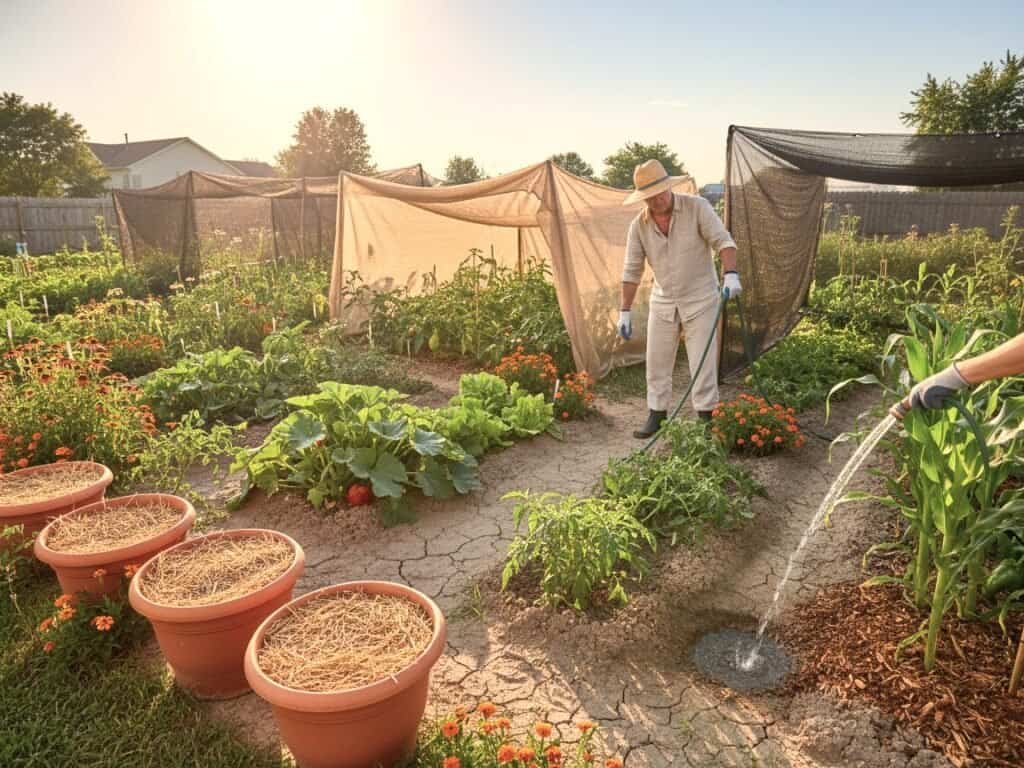
These problems are often seen by home gardeners in very hot weather, even when their plants were healthy before. Vegetables, flowers, herbs, seedlings, and container plants are all vulnerable when temperatures rise too high.
Understanding the effects of extreme heat on plants helps gardener take action before damage becomes severe. Smart watering, mulch, shade, healthy soil, and careful plant selection can help protect a garden during hot weather.
Learn how extreme heat impacts garden plants, what to watch for and how to best help plants survive and recover in this article.
2. What Counts as Extreme Heat for Garden Plants?
Extreme heat doesn’t mean the same for all plants. Certain plants are naturally suited to warm weather, while others thrive in cooler weather. For many plants in the home garden, extreme heat is defined as daytime temperatures exceeding the normal comfort zone for a few hours or several days.
Cool-season vegetables such as lettuce, spinach, cabbage, broccoli, peas and cilantro can take a hit when temperatures rise above about 80°F to 85°F. These plants may cease to grow, bolt early, or develop a bitter taste. Crops that do best in warm weather, such as tomatoes, peppers, eggplants, cucumbers and beans, can take more heat, but they, too, can suffer if the temperature is above 90 to 95 degrees F for too long.
Extreme heat is more dangerous if it is accompanied by dry soil, strong sunlight, hot wind, or high humidity. Under these conditions, plants lose water faster. The plant begins to wither and weaken if its roots cannot take in enough moisture.
Night temperatures are also a big deal. Plants need colder nights to recover from hot days. If nights are very warm, plants are under stress for a longer period of time. This may limit flowering, fruiting and general growth.
Container plants are more susceptible to extreme heat as pots heat up quickly. They also tend to dry out faster than in-ground gardens. Young seedlings are particularly susceptible, their roots being still small and shallow.
Simply put, extreme heat is when it’s hot enough to interfere with normal plant growth. The longer the heat lasts, the more damage it can do. Gardeners need to look beyond the temperature number and consider soil moisture, sunlight intensity, wind, humidity and the appearance of the plants.
3. Common Signs of Heat Damage in Plants
Heat damage usually begins with subtle warning signs that can lead to serious issues. The most common sign is wilting. On hot afternoons, leaves might wilt, curl, or appear weak. If wilting occurs daily, the plant is stressed; sometimes plants recover in the evening.
Another sign is curled-up leaves. Some plants curl their leaves to prevent water loss. This is a natural protection method but it also means the plant is having heat problems. The leaves may also turn yellow or brown or crispy at the edges.
- Typical signs of heat damage are:
- Drooping foliage
- Leaves curled or folded
- Leaf tips or edges brown
- Leaves turning yellow
- Flower Dropping
- Small or malformed fruits
- Sunscald of fruits or stems;
- Slow growth
- Hard, dry ground
- Seedlings tumble over
Often flowers become affected before other parts of the plant. Extreme heat can cause tomatoes, peppers, beans, cucumbers and squash to drop their flowers. If there are no flowers, the plant cannot fruit.
Fruits may also be heat injured. Sunscald is a sunken or discoloured spot on tomatoes and peppers that can become pale. Cucumbers can come out bitter, leafy greens can bolt out of season.
Seedlings are easily damaged because their stems are tender and their roots are shallow. After a few hours of intense heat, they could collapse.
Gardeners should check plants in the morning and evening. If a plant is droopy in the afternoon but recovers by morning, it might be able to be saved. If it is still wilted in the morning, then the damage is more serious and the plant needs immediate care.
4. Why Plants Wilt During Hot Weather
Wilting happens when a plant loses water faster than it can absorb water through the roots. Plants release water vapour from tiny openings in their leaves as the weather warms. The process cools the plant, but also uses a lot of moisture.
In very hot, dry or windy weather, water evaporates from the plant rapidly. If the soil is dry the roots can not replace the water that is lost. Consequently, the leaves soften and begin to sag.
Wilting doesn’t always mean your plant is dead. Sometimes it is a passing reaction to the warmth of the afternoon. Many plants will wilt a bit during the hottest part of the day, then come back when temperatures cool later. But repeated wilting will weaken the plant in the long term.
Wilting severely can harm plant cells. Leaves can be thin, dry or brown. Flowers fall and fruit production may slow down. If the roots are kept dry for too long the plant might not recover.
Plants in containers will wilt quicker than plants in the ground because there’s less soil and moisture in pots. The dark coloured pots can absorb more heat also making roots hotter. Hanging baskets are particularly vulnerable because they are open to sun and wind from all directions.
To avoid wilting, gardeners should water deeply in the morning. Deep watering allows moisture to reach the root zone. Mulch also helps to keep the soil cooler and reduce evaporation.
It is important not to just water the surface. Plants weak in hot weather because light watering encourages shallow roots. Plants with a more robust root system survive the heat better.
Wilting is one very obvious sign that a plant is in trouble. If gardeners respond early with water, mulch and shade many plants can recover before the damage is permanent.
5. How Extreme Heat Affects Plant Roots
Roots are hidden underground, but are very affected by extreme heat. Healthy roots absorb water, nutrients and oxygen. They don’t work well if the soil is too hot or too dry.
High soil temperatures can damage root tips. The tips of these roots are the most active parts of the root system, enabling the plant to take in moisture and nutrients. If they are damaged, the plant might not recover, even if water is added later.
Dry soil aggravates the problem. As the soil dries, roots may shrink, cease to grow, or die off. The shallow-rooted plants are the first to suffer; they cannot reach down to the moisture. Leafy greens, herbs, seedlings and container plants are particularly susceptible.
Extreme heat can also reduce the amount of oxygen in the soil, especially if a gardener waters too much after a heat wave. Roots need air and water. If the soil gets too wet, the roots may rot. Here is where good drainage is important.
- Some signs that roots are under stress:
- Even after watering, wilting
- Gradual growth
- Yellow leaves
- Weak flowering
- Small fruit
- Weak stalk
- Plant mortality
Mulch is one of the best ways to protect roots . A layer of straw, dry leaves, wood chips or compost will keep the soil cooler and reduce moisture loss It also improves soil structure, so it holds water without becoming too compacted.
Raised beds tend to heat up and dry out faster than ground level beds so watch for dry and hot conditions. If possible, move containers to partial shade during extreme heat.
Gardeners can also protect the roots by watering deeply but less often. This encourages roots to grow downwards rather than on the surface.
Deep roots make strong plants. Plants are more likely to survive dry spells, recover from stress and continue to produce leaves, flowers and fruits if their roots are protected against heat.
6. Leaf Burn, Sunscald, and Crispy Edges
Extreme heat and strong sunlight can cause plant leaves, stems and fruits to burn. This damage is sometimes referred to as leaf burn, sunscald or scorching. It occurs when plant tissue gets too hot and loses moisture faster than it can be replenished.
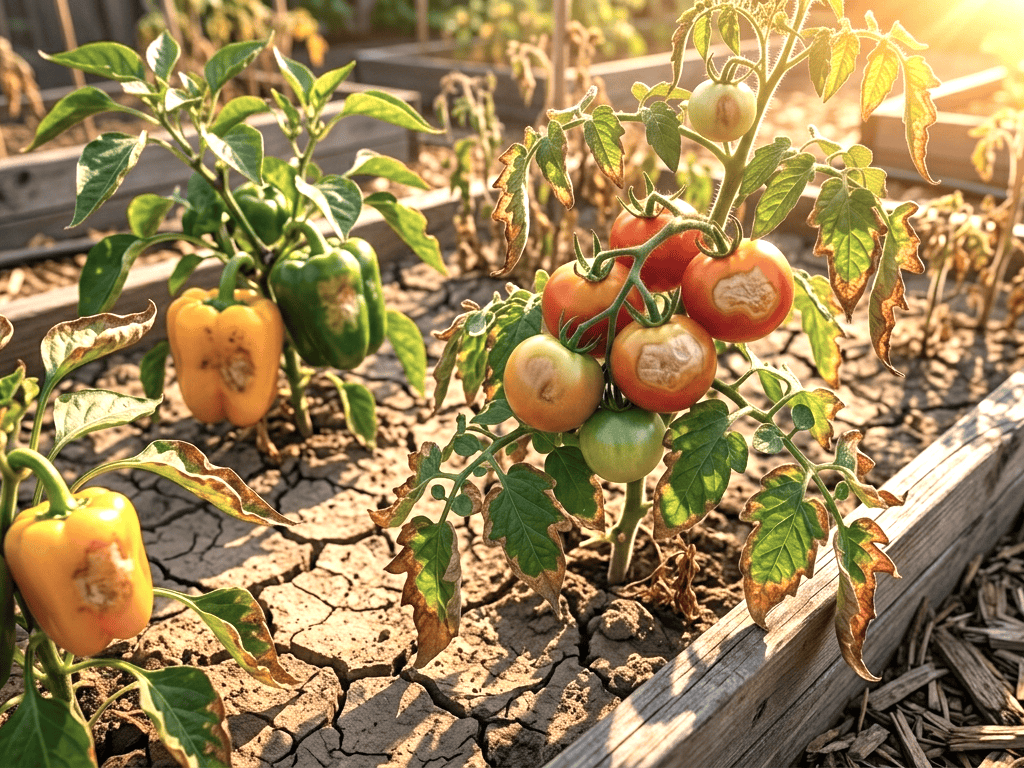
Typically brown, dry, or crispy edges indicate leaf burn. You may see some leaves with pale or white patches due to damage to the surface by sunlight. Tender leaves are more prone to burning, especially when on seedlings, leafy greens, and plants that have just been introduced outside.
Sunscald is a common problem for tomatoes, peppers, cucumbers, squash and eggplants. It appears as pale, yellow, white or sunken patches on the fruit. These areas may become soft or dry and later attract disease.
Plants that lose leaves suddenly are more likely to suffer sunscald because the fruit is exposed to direct sunlight. This can happen after too much pruning or pest damage.
Hot wind can dry the leaves and make the leaf edges crisp up as well. If the soil is moist, the plant may be losing water too quickly through the leaves.
- To prevent sun scald and leaf burn:
- Use shade cloth on extreme heat.
- Do not prune hard in hot weather.
- Keep the soil moist.
- Add mulch around the plants.
- Relocate container plants away from strong afternoon sun.
- Harden off seedlings before putting them out in the garden.
Shade cloth is extremely useful as it reduces the intensity of sunlight but does not block out all light. 30% to 50% shade cloth can assist many vegetables during heat waves.
Damaged leaves typically do not green up again. But if the plant is still healthy it can put out new growth. Only cut poorly damaged leaves and do not cut too much at once.
Leaf burn and sunscald are signs that plants need protection from strong heat and sun. Gardeners can help minimise damage and keep plants healthier by providing shade, moisture and attentive care.
7. How Heat Reduces Flowering and Fruit Production
Many garden plants will produce less flowers and fruit in extreme heat. Plants that appear healthy and green can also stop producing at high temperatures.
Flowers are heat sensitive. In vegetables such as tomatoes, peppers, beans, cucumbers, squash and eggplants, high heat can make flowers drop before fruit is set. This is known as blossom drop.
A common example is tomato’s. If days are too hot or nights don’t get cool enough, tomato pollen can become less effective. If pollination is poor flowers are shed and no fruit is produced. Good pollination is necessary for fruit development.
During heat waves, peppers may also drop flowers. Beans will not set pods. Cucumbers and squash may have fewer female flowers, reducing harvests.
And fruit quality can suffer. Heat stressed plants may produce smaller fruits, misshapen fruits or fruits with poor flavour. Cucumbers may be bitter. Lettuce and herbs can bolt and quickly become bitter.
“Heat reduces production because the plant goes into survival mode. It does not waste energy on flowers and fruits, but focuses on staying alive. Water loss, root stress and poor pollination all contribute to the problem.
Pollinators can also become less active during heat extremes. Bees usually don’t fly in the hottest part of the day. Fewer pollinators visiting flowers means less fruit production.
To safeguard flowering and fruiting plants:
- Water deeply and frequently.
- Mulch to keep roots cool.
- Provide shade in the afternoon.
- Don’t over-fertilize during heat waves.
- “Harvest ripe fruits promptly.
- Plant heat-tolerant varieties.
- Plant flowers that attract pollinators.
Don’t panic, gardeners, if plants stop producing during a heat wave. Many plants will start flowering again as temperatures improve. The aim is to preserve plants and keep them healthy until the weather improves.
8. Why Soil Dries Out Faster in High Heat
In hot weather, the soil dries more quickly, as the water evaporates more rapidly from the surface. The hot sun, dry air and wind all remove moisture from the soil. When the soil is dry there is less water available for the roots of plants.
The rate of drying is dependent on the type of soil. Sandy soil drains quickly, holds less water. Clay soil holds moisture longer. However, clay soil can be hard and cracked when dry. Loamy soil generally holds moisture better, along with better support for healthy roots.
Raised beds often dry faster than in-ground beds because they are more exposed to air. Container gardens can dry out even faster because pots have limited soil. In extreme heat, small pots may need watering each day.
Dry soil can cause many problems. It can become hard, which makes it difficult for roots to grow. Water may run off the surface rather than soaking in. Some helpful soil organisms may become less active. The fertiliser might be there but the plants might not be able to absorb the nutrients.
One of the best answers is to mulch. It blankets the soil and retards evaporation. Organic mulches such as straw, dry leaves, grass clippings, compost or wood chips also improve the soil in time.
Compost also helps soil retain moisture which is important. Organic matter-rich soils are better able to absorb water and release it slowly to plant roots.
Good watering habits count too. “Watering deeply helps the moisture penetrate to lower soil levels. A light watering will only wet the surface and will evaporate quickly in hot weather.
Gardeners can check soil moisture by sticking a finger into the soil. If the top inch is dry but the soil below is moist, the plant may be okay. If the soil is dry several inches deep, water it.
In the heat of summer, protecting the soil is the same as protecting the plants. “Keeping soil cool and moist allows plants to survive extreme weather and continue to grow.
9. Plants Most Vulnerable to Extreme Heat
Certain plants are more vulnerable to extreme heat than others. Cool-season crops are the first to go, usually. These plants do best in mild weather and often struggle as temperatures rise.
Vulnerable vegetables are:
- Lettuce.
- Spinach (Spinacia oleracea)
- Kale
- Broccoli
- Cabbages
- Peas, green
- Radishes –
- Cilantro
- Cauliflower
- Parsley
These crops can bolt, wilt, turn bitter or stop growing in hot weather. Leafy greens are particularly sensitive as the leaves dry out quickly.
Young seedlings are also susceptible. Their roots are small, and can’t go deep into the soil for moisture. They have soft leaves and stems that burn easily. Seedlings planted in hot weather will fall down in a day without protection.
Another group at risk are container plants. Pots heat up fast and the soil dries out sooner than garden beds. During hot spells, potted herbs, flowers and vegetables may require extra attention.
Plants with shallow roots suffer more likely. They rely on moisture near the soil surface that dries up quickly in extreme heat.
Some flowering plants also don’t do well in high temperatures. Petunias, pansies, impatiens and some roses can stop blooming or have burnt petals. Strong sunlight may cause flowers to fade more quickly.
Fruit trees & shrubs can be damaged, especially young ones. New trees need regular watering because their roots are not yet fully developed.
Some plants, though, are better with heat. Okra, sweet potatoes, eggplant, rosemary, thyme, basil, lavender, zinnias and many native plants can handle more heat.
The best thing is to suit plants to the season and climate. Plant cool season crops during the cooler months and heat loving crops during the summer months. Use mulch around all garden beds and shade sensitive plants.
Knowing which plants are vulnerable allows gardeners to take preventive action before extreme heat causes serious damage.
10. How to Protect Garden Plants from Heat Damage
A good first step is to prepare garden plants for the heat to prevent damage. Gardeners should look for plants that are “already very wilted. Simple steps can help plants survive hot weather and reduce stress.
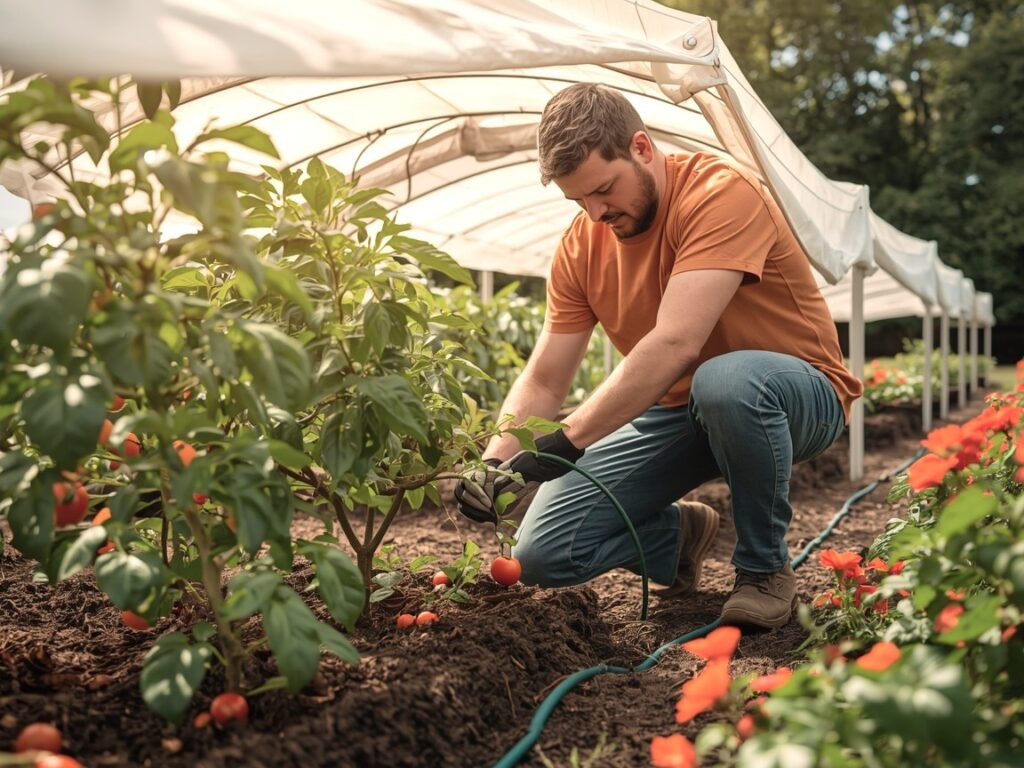
The first method is to water correctly. A good long watering to get down to the roots. It is best to water in the morning so the plants have time to absorb it before the hottest part of the day.
Another important protection is mulch. Mulch cools the soil, slows evaporation and protects the roots. Organic mulch also improves the health of the soil as it decomposes.
Shade is very good in the extreme heat. Block harsh afternoon sun with shade cloth, garden fabric, umbrellas, trellises or taller plants. Partial shade is best for sensitive plants such as lettuce, seedlings and container herbs.
Gardeners should also refrain from transplanting during heat waves. Newly transplanted plants are already stressed and may not survive extreme temperatures. If you have to plant, do it at night and water well.
Don’t prune hard in hot weather. Leaves are used to shade fruits and stems. Over pruning can lead to sunscald of the plant.
Fertilising in extreme heat should be limited, as well. Fertilizer encourages new growth, but new growth is tender and easily damaged. Wait till the weather cools off.
Useful ways of protecting yourself include:
- Water deeply in the morning.
- Put mulch around plants.
- Use shade cloth.
- Move pots into partial shade.
- Protect the seedlings.
- Avoid pruning too much.
- Add compost to improve the soil.
- Take your mature crops before they’re ready.
Container plants need frequent checking. Keep them away from hot walls, concrete or metal surfaces that reflect heat.
You don’t need to spend a fortune on heat protection. Even simple materials like cardboard shade, bamboo screens, dry leaves or homemade mulch can help.
Future outlook: The warmer-than-normal trend is forecast to persist.
11. Best Watering Practices During Heat Waves
Watering is one of the most important jobs during heat waves. But if you water incorrectly you may waste water or even damage the plants. The goal is to provide plants with moisture, not to create a soggy soil.
The best time to water is early in the morning. Morning watering allows plants to take in moisture before the heat of the day. It also allows leaves to dry thereby reducing the risk of fungal disease.
Water deeply rather than shallowly. Slow, deep soaking encourages the roots to grow downward. Deeper roots help plants weather heat and drought.
Gardeners should not water only the surface of the soil. Surface water evaporates quickly and promotes shallow roots. Instead, water at the drip line so the moisture can reach the root zone.
Drip irrigation is very helpful as it slowly delivers water directly to the soil. Soaker hoses are great too. These methods reduce evaporation and keep the leaves dry.
Container plants may need to be checked daily during heat waves. Some pots may need watering once or twice a day, particularly small pots or hanging baskets.
Some signs your plant needs to be watered are:
- Soil dry a few inches deep.
- A wilting that is not better the next morning
- Curling leaves
- Drooping stems
- Lightweight containers
It is also possible to overwater. If the soil is wet and smells bad, the roots might not be getting enough oxygen. Yellow leaves can be a sign of both underwatering and overwatering so be sure to check the soil.
Mulch allows the water to be retained longer in the soil, making watering more effective. Compost also helps retain water.
During heat waves, watering should be thoughtful, not rushed. Water deeply and consistently to keep plants healthier and reduce heat stress.
12. Using Mulch and Shade to Keep Plants Cooler
Mulch and shade are two of the best weapons in the arsenal for protecting plants from extreme heat. Together they lower soil temperature, slow water loss, and protect against sun damage.
Mulch is like a blanket of protection over the ground. It prevents direct sunlight from reaching the soil surface. This helps to keep roots cooler and moisture in the soil longer.
Good mulch materials include:
- Straw
- Leaves dry
- Grass clippings
- Wood shavings
- Compost
- Bark, shredded
- Pine Needles (Holly)
A mulch layer of 2 to 3 inches deep is generally helpful for vegetables. To avoid rot, keep the mulch away from the plant’s stems.
Shade protects leaves, flowers, and fruits from intense sun light. Shade cloth is one of the best options because it allows some light through while reducing heat stress. Many garden plants do well with a 30% to 50% shade cloth.
Temporary shade can also be created with old bedsheets, garden netting, bamboo screens, umbrellas, or cardboard panels. It is not meant to block out all sunlight, but rather to cut down on the harshest afternoon sun.
Shade is particularly helpful for:
- Seedlings
- Green leafy vegetables
- Herbs
- Potted Plants
- Newly transplanted plants
- Plants with sunscald risk
Gardeners can use natural shade, too. Taller crops like corn, sunflowers or trellised beans can shade shorter plants. This is a useful method in climate-smart garden design.
Mulching and shading are inexpensive and simple ways to prevent heat damage. They keep plants cooler, use water more efficiently and recover more quickly from hot weather.
13. How to Help Plants Recover After Heat Stress
Plants need gentle care after extreme heat. Check the damage first. That’s the first step. Check for wilted leaves, crispy edges, dropped flowers, sunscald, dry soil and broken stems.
Don’t prune too fast. A few sagging leaves may perk up again with watering, cooler weather. Wait a few days and cut out the damaged parts. Remove only leaves and stems that are fully brown, dry, or diseased.
Water deeply if soil is dry. A slow soak helps get moisture down to the roots. Don’t flood the soil because stressed roots can rot if they sit in water.
Move container plants to partial shade while they recover. In garden beds, use temporary shade cloth during the hottest part of the day.
Avoid fertilising immediately after heat stress. Fertiliser can encourage new growth, but the plant may not have the energy to support it. Wait for the plant to show signs of recovery.
Recovery steps:
- Water slowly and deeply.
- Lay or relay a mulch.
- Give temporary shade.
- Remove only dead leaves.
- Do not prune heavily.
- Fertiliser postponed.
- Watch for pests, and disease.
- Keep the soil evenly moist.
Some plants may drop flowers or fruit after heat stress. That is normal. The plant is conserving energy. If roots and main stems are healthy, it may come back when conditions improve.
If the damage is severe, seedlings may not recover. Perhaps re-planting would be better then.
Heat-stressed plants are weaker, so pests and diseases may attack them more easily. Check leaves and stems frequently during recovery.
Patience is the key. Water, shade and time can help many plants recover from heat stress. The garden can be restored to vigorous growth with careful attention.
14. Final Thoughts
Extreme heat can hurt garden plants in a number of ways. It can lead to wilting, dry soil, root stress, leaf burn, sunscald, flower drop and poor fruit production. Some plants may spring back quickly, others need a little extra care.
Home gardeners can reduce heat damage through deep watering, mulching, providing shade, improving soil health and selecting heat-tolerant plants. It’s also important to monitor plants closely during heat waves and take early action.
A garden need not fail because of hot weather. Smart protection and careful recovery steps can help gardeners make sure plants survive extreme heat and thrive again.