
Dreaming of fresh herbs and vibrant blooms, but convinced you need a shed full of gear to grow them in your apartment? Think again. Apartment gardening is a unique and rewarding pursuit, defined by clever use of space and a shift in mindset. The challenges—limited square footage, concerns about mess and storage—are real, but so are the profound joys of nurturing life in your own urban oasis.
The secret lies in embracing the philosophy of “less is more.” A garage-worth of bulky tools only leads to clutter, frustration, and wasted money. Instead, the right compact, multi-purpose tools are your allies. They keep your space organized, save you cash on unnecessary equipment, and are specifically designed to make small-scale tasks like repotting, pruning, and watering simpler and more efficient.
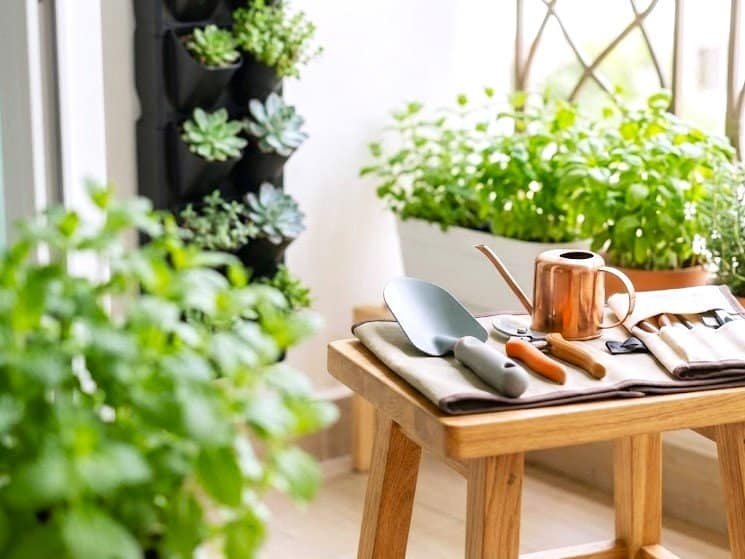
This guide is your roadmap to cultivating that joy without the clutter. We’ll walk you through the entire journey, from selecting your first bag of soil to harvesting your own homegrown bounty. You’ll discover that with a minimal, thoughtfully curated toolkit designed for confined spaces, you can unlock the full, thriving potential of your apartment garden. Let’s dig in.
Chapter 1: The Core Four – Essential Hand Tools for Every Apartment Gardener
Forget the oversized shovels and rakes of traditional garden sheds. Apartment gardening is a game of precision, not power. Your toolkit should be a curated collection of specialists, not a pile of generalists. This focused approach starts with four non-negotiable hand tools that will handle 95% of your gardening tasks, from potting a new succulent to harvesting basil for dinner. Investing in these “Core Four” means you invest in efficiency, save precious storage space, and make the physical act of gardening a genuine pleasure.
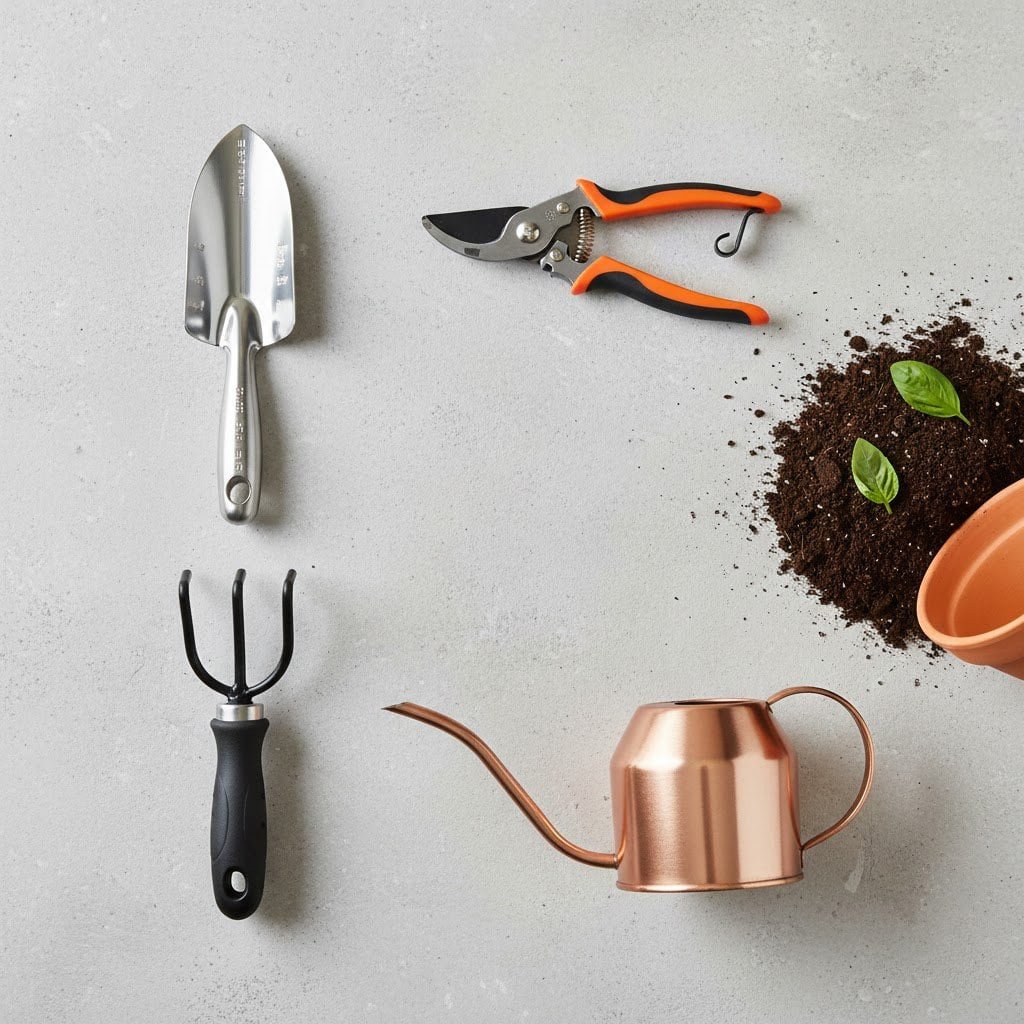
1.1 The Precision Trowel: Your #1 Planting Workhorse
This is your most-used tool, so choose wisely. A standard garden trowel is often too wide and deep for containers. Instead, seek out a precision or hand trowel. Look for three key features: First, a narrow, pointed blade that allows you to dig precise holes for seedlings or small plants in crowded pots without disturbing neighboring roots. Second, depth markings on the blade—these tiny measurements are incredibly helpful for planting bulbs or seeds at the correct depth, taking the guesswork out of the process. Finally, a comfortable, ergonomic grip that fits your hand. You’ll be using this tool for delicate work, so avoid bulky plastic handles that can cause fatigue. A well-designed trowel feels like an extension of your hand.
1.2 Micro Pruners/Snips: The Surgeon’s Scalpel
A clean cut is crucial for plant health. Using scissors or tearing stems can crush plant tissue, inviting disease. For herb stems, deadheading flowers, trimming leggy growth, or harvesting greens, a pair of sharp, bypass-style micro pruners is indispensable. “Bypass” means the blades slide past each other like scissors, creating a clean slice. “Micro” or “detail” pruners are smaller and offer superior control for intricate work compared to their larger counterparts. Look for a secure latch for safe storage and spring-loaded handles to reduce hand strain during repetitive snipping. This one tool elevates you from a passive plant owner to an active, caring gardener.
1.3 The Hand Fork or Cultivator: The Soil Refresher
Over time, potting soil in containers can become compacted and hard, preventing water and air from reaching the roots. This is where your hand fork (typically with three short, sturdy tines) shines. Its primary job is gentle cultivation—carefully breaking up that crusty top layer of soil to aerate it without damaging the delicate root system beneath. It’s also perfect for mixing in slow-release fertilizer or working compost into your pots. For very small pots or window boxes, an even daintier fork/transplanter combination tool might be all you need.
1.4 The Compact Watering Can: The Art of Targeted Hydration
The wrong watering can create more mess than growth. A large, bulky can is hard to maneuver and often leads to overwatering. Your apartment ally is a compact watering can with a long, narrow spout, often called a “roser” or a “long-reach” spout. This design allows you to direct water precisely to the soil at the base of the plant, avoiding wasteful splashback and, most importantly, keeping water off the leaves (which can promote fungal diseases). A well-balanced can with a comfortable handle makes the routine of watering a mindful ritual, not a chore.
Bonus Tip: Many brands offer nesting or folding tool sets that combine these Core Four into one storage-friendly unit. This is an excellent, space-smart way to get started, ensuring you have the right tool for every fundamental task, neatly contained in a drawer or hung on a hook. Start with this solid foundation, and you’re equipped for almost everything your apartment garden will ask of you.
Chapter 2: Smart Solutions for Messy Problems
Let’s be honest: gardening can be messy. In an apartment, a little spilled soil or a watering mishap isn’t just an outdoor inconvenience—it’s a cleanup project on your living room floor. The key to effortless apartment gardening isn’t just preventing messes, but having the right compact tools to manage them gracefully. This chapter focuses on the clever, space-saving gear that tackles the inevitable dirt and disorganization, keeping your indoor oasis serene and your cleaning routine simple.
2.1 Soil Scoops & Transplanters: The End of the Dustpan
Pouring soil straight from the bag is a recipe for a cloud of dust and a pile of waste. Enter the humble soil scoop. This wide-mouthed, often ergonomic tool is a game-changer for neatly refilling pots, topping up raised beds, or starting seeds in trays. Look for one with a flat edge to level off measurements. Similarly, a long-handled transplanter—essentially a slender, deep scoop—allows you to remove and transfer seedlings with their root balls intact, minimizing shock and mess. Together, they ensure the soil goes exactly where you want it: in the pot, not on the floor.
2.2 Collapsible Bins & Buckets: Your Multi-Purpose Workhorse
You need a vessel for mixing potting soil, holding weeds, soaking pots, or carrying your harvest. A bulky, hard-sided bucket consumes valuable storage. The brilliant solution is a collapsible silicone or fabric bin. These are sturdy enough to hold several gallons of soil or water while in use, but once empty, they fold or roll down to a fraction of their size, easily tucking beside the fridge or under a sink. They are the ultimate embodiment of apartment utility—maximum function with minimal permanent footprint.
2.3 Knee Pads & Compact Mats: Protect Your Knees and Your Floors
Gardening often means getting down to plant level. Kneeling on hard tile or scratching your hardwood floors is no one’s idea of fun. A thin, foam knee pad or a compact, roll-up gardening mat provides crucial cushioning for your joints and creates a clean, protected workspace. These mats also catch spills and soil debris, which you can then easily tip back into a pot or bin. It’s a small tool that makes longer potting sessions physically comfortable and tidier.
2.4 The Miniature Rake: For Finesse, Not Force
A full-sized garden rake belongs in a yard. For your apartment containers, a miniature hand rake with short, fine tines is the perfect finishing tool. Its primary job is gently smoothing and leveling the soil surface in window boxes, shallow planters, or seedling trays before sowing seeds. It’s also ideal for carefully scratching in granular fertilizer or deftly clearing fallen leaves and debris from the soil around small plants without disturbing delicate stems. It’s the tool for detail work, bringing order and a professional touch to your miniature landscapes.
By integrating these smart solutions into your routine, you shift your focus from managing chaos to cultivating growth. They transform potentially frustrating tasks into smooth, contained operations. With the mess under control, you’re free to enjoy the creative and therapeutic heart of apartment gardening, all while keeping your living space as pristine as you found it.
Chapter 3: Watering Wisdom – Tools for the Right Hydration
Watering is the most frequent, and arguably most critical, task in apartment gardening. Get it wrong, and plants suffer from drought stress or, more commonly, fatal root rot. The confined space of pots means there’s little room for error. Mastering hydration isn’t about volume; it’s about precision, consistency, and choosing tools that give you control. This chapter explores the specialized watering gear that replaces guesswork with confidence, ensuring your plants get just what they need—no more, no less.
3.1 Watering Globes & Self-Watering Stakes: The Vacation Allies
Life gets busy, and even the most attentive gardener can forget a watering day. Self-watering tools are brilliant low-tech solutions for maintaining consistent moisture. Glass watering globes are not only functional but decorative; as the soil dries, air enters the globe, releasing water slowly into the pot. More reliable are terracotta watering stakes or plant nanny spikes. You insert these porous cones into the soil and attach them to a bottle of water; the terra cotta releases moisture in direct response to the soil’s dryness. These tools are perfect for thirsty plants or providing peace of mind during a short trip.
3.2 Spray Bottles & Misters: For Humidity and Delicate Care
Many beloved apartment plants, like ferns, prayer plants, and orchids, thrive on humidity. A simple fine-mist spray bottle is essential for boosting moisture around their leaves, especially in dry, air-conditioned or heated rooms. It’s also the perfect tool for gently watering delicate seedlings that could be washed away by a can’s pour, and for keeping propagation mediums moist for cuttings. Choose a bottle with an adjustable nozzle for a mist or stream, and keep it dedicated to plants (no cleaning solutions!).
3.3 Watering Wands with Shut-Off Valves: Reach Without the Stretch
Hanging planters, high shelves, and the back row of a balcony garden can be awkward to water without drenching everything in front. A watering wand—a long, lightweight tube that attaches to your faucet or hose—solves this. For apartments, look for a wand with a thumb-operated shut-off valve at the handle. This allows you to turn the water on and off right at the source, preventing drips as you move between plants. Many come with gentle shower-head attachments that mimic a soft rain, ideal for soaking soil without disturbing it or damaging fragile foliage.
3.4 The Sump Pump Saucer Trick: A Clever Hack for Drainage
Overwatering often happens from the bottom up, when a pot sits in drained excess water. While saucers are a must, they can overflow. A pro-level hack is to use a sump pump saucer. These are large, plastic trays with a raised, grid-like bottom. You place your potted plant on top. When you water, the excess drains under the pot, into the reservoir below, but the pot itself is elevated out of the water, preventing the roots from sitting in moisture. It’s a simple, inexpensive tool that virtually eliminates the risk of overwatering from below.
Mastering these tools transforms watering from a chore into an act of attentive care. By delivering water precisely, consistently, and appropriately for each plant’s needs, you build a resilient and thriving indoor garden. The right tool doesn’t just make the job easier—it makes you a better gardener.
Chapter 4: Pruning & Care in Confined Spaces
Beyond the basics of planting and watering lies the art of maintenance—the subtle care that turns a collection of plants into a thriving, productive garden. In the close quarters of an apartment, this care requires a light touch and the right compact tools. Pruning, harvesting, and monitoring are not just chores; they are intimate acts of observation that keep your plants healthy, shapely, and bountiful. This chapter equips you with the specialized implements for this finer work, ensuring every snip and check supports vibrant growth.
4.1 Herb Drying Racks & Compact Harvest Baskets: From Snip to Savor
The joy of apartment gardening peaks at harvest time. Having a dedicated system for handling your yield maximizes flavor and minimizes waste. A small, collapsible herb drying rack (often made of mesh or wood) allows you to air-dry thyme, rosemary, or oregano in a well-ventilated corner, turning abundance into a year-round pantry staple. For daily use, a shallow, wide harvesting basket or bowl is perfect for gathering basil leaves, cherry tomatoes, or snips of greens. It keeps your harvest contained, prevents bruising, and makes the ritual feel purposeful. These tools bridge the gap between garden and kitchen seamlessly.
4.2 Compact Moisture Meters: Taking the Guesswork Out of “When to Water”
Even experienced gardeners can misjudge soil moisture, especially in deep pots. Your finger only tells part of the story. A compact, probe-style moisture meter is a revelation. Simply insert the metal probe into the root zone, and a simple gauge tells you if the soil is dry, moist, or wet. This eliminates overwatering, the #1 killer of houseplants, and takes the anxiety out of caring for finicky species. Look for a basic model without unnecessary bells and whistles—it’s a small investment that saves countless plants.
4.3 Feather Dusters or Soft Brushes: The Leaf Care You Didn’t Know You Needed
Dust isn’t just unsightly on leaves; it blocks sunlight and hampers photosynthesis, slowly weakening your plants. In an apartment, dust accumulates quickly. A dedicated, soft-bristled brush (like a clean makeup brush) or a feather duster allows for gentle, regular leaf cleaning. Gently dusting the broad leaves of a Monstera or the needles of a rosemary plant keeps them breathing and photosynthesizing at peak efficiency. It’s a minute of care that pays dividends in plant vigor and visual appeal.
4.4 Portable LED Grow Lights with Timers: Your Sunlight Supplement
Light is the ultimate “tool” for any gardener, and apartrments often lack ideal sun. A slim, adjustable LED grow light is the compact, energy-efficient solution. Modern panels or gooseneck lamps are discreet, emit little heat, and can be clipped to a shelf or set on a stand. The crucial feature is a built-in timer. Automating your light schedule to provide 12-16 hours of supplemental “sun” ensures consistency, which is key for seedlings, herbs, and flowering plants. It’s the tool that guarantees growth, regardless of your window’s orientation or the season.
Equipped with these care tools, you become an attentive steward of your miniature ecosystem. You move from reactive problem-solving to proactive cultivation, anticipating your plants’ needs and responding with precision. This attentive care is where the deep satisfaction of apartment gardening truly blooms, turning routine upkeep into a rewarding dialogue with your plants.
Chapter 5: Storing Your Mini-Toolkit: Out of Sight, Mindful & Organized
You’ve assembled the perfect, pared-down arsenal of compact tools—but the final, crucial step of apartment gardening is putting them away. Clutter is the enemy of a peaceful urban sanctuary, and a pile of tools in the corner undermines the very serenity your garden provides. Smart storage isn’t just about tidiness; it’s about respecting your space, prolonging the life of your tools, and making the next gardening session effortlessly easy to begin. This chapter reveals clever, space-sensitive solutions to keep your toolkit accessible yet invisible.
5.1 The Over-the-Door Shoe Organizer Hack: Vertical Vision
One of the most celebrated storage tricks in small-space gardening is repurposing a clear, over-the-door shoe organizer. Hang it on the back of a closet door, on a balcony wall, or inside a pantry. Each pocket becomes a perfect home for a hand trowel, pruners, gloves, twine, and packets of seeds. The clear plastic allows you to see everything at a glance, and it utilizes dead vertical space with zero floor footprint. It’s affordable, highly effective, and keeps dirt contained.
5.2 Tool Rolls & Fabric Caddies: The Portable Command Center
For the gardener who moves between a sunny window, a balcony, and a kitchen counter, a canvas tool roll or a sturdy fabric caddy is ideal. A tool roll unfurls to reveal designated slots for each tool, then rolls up neatly and ties closed—perfect for tucking in a drawer. A handled caddy acts like a portable workstation, allowing you to carry your Core Four, a small bag of soil, and a seed packet in one trip. Both solutions corral your gear into a single, grab-and-go unit.
5.3 Decorative Pots & Baskets: Camouflaged Storage
The best storage often hides in plain sight. Use a large, decorative planter or a stylish woven basket as a dual-purpose object. Place it next to your plant collection, and use it to hold your tools upright, along with sprays and fertilizers. Choose a design that complements your decor; it will look like an intentional part of your plant display, not a storage bin. This method blends function with aesthetics seamlessly.
5.4 A Dedicated “Gardening Drawer” or Box: The One-Boundary Solution
Sometimes, simplicity is king. Designate one specific drawer in a kitchen or entryway console, or a single lidded storage box that slides under a bed or sofa. This becomes the non-negotiable home for all gardening items. The discipline of containing everything within this single boundary prevents tools from migrating and creating clutter. Use small drawer dividers or a utensil tray inside to keep tools separated and orderly. When the drawer closes or the lid goes on, your gardening hobby is neatly filed away.
Implementing these storage strategies completes the cycle of mindful apartment gardening. It transforms your tools from potential clutter into a curated collection, ready for service but respectful of your living space. A well-organized system not only protects your investment in quality tools from loss or damage but also lowers the barrier to starting a spontaneous task. When everything has a designated home, the joy of gardening remains pure, focused, and perfectly integrated into your urban life.
Conclusion: Cultivating Joy, Not Clutter
The journey of apartment gardening is a masterclass in intentionality. It proves that abundance isn’t born from owning more, but from choosing better. By embracing the “less is more” philosophy and equipping yourself with the compact, multi-purpose tools outlined in this guide, you’ve done more than save space—you’ve removed the barriers between you and the simple joy of growing. Your garden is no longer a source of clutter or chore dread, but a curated haven of life and creativity.
Remember, a thriving urban garden is built step by step. Start with the Core Four, add a smart solution for mess, and expand only when a specific need arises. Invest in quality over quantity; a few well-made, ergonomic tools will serve you for years, making every task feel easier and more precise.
Ultimately, the right tools are simply an extension of your care. They empower you to tend to your plants with confidence and efficiency, turning maintenance into mindful moments. Your apartment garden is a personal sanctuary of green—a testament to the fact that you don’t need a yard, or a garage full of equipment, to cultivate beauty, nourishment, and peace. Now, go enjoy the harvest.
1 thought on “Gardening in an Apartment? Ditch the Bulk With These Compact Tools”