
Keeping your lawn clean doesn’t always require noisy or expensive equipment. For many homeowners, a manual lawn sweeper offers a simple, eco-friendly way to collect leaves, grass clippings, and light debris. This guide explains what a manual lawn sweeper is, how it works, and when it’s the right tool for your yard.
What Is a Manual Lawn Sweeper?
A manual lawn sweeper is a simple, push-powered lawn care tool designed to collect leaves, grass clippings, and other light debris from your lawn without using electricity, batteries, or fuel. It is an eco-friendly alternative to powered lawn equipment and is especially popular among homeowners who want a quiet, low-maintenance solution for routine yard cleanup.
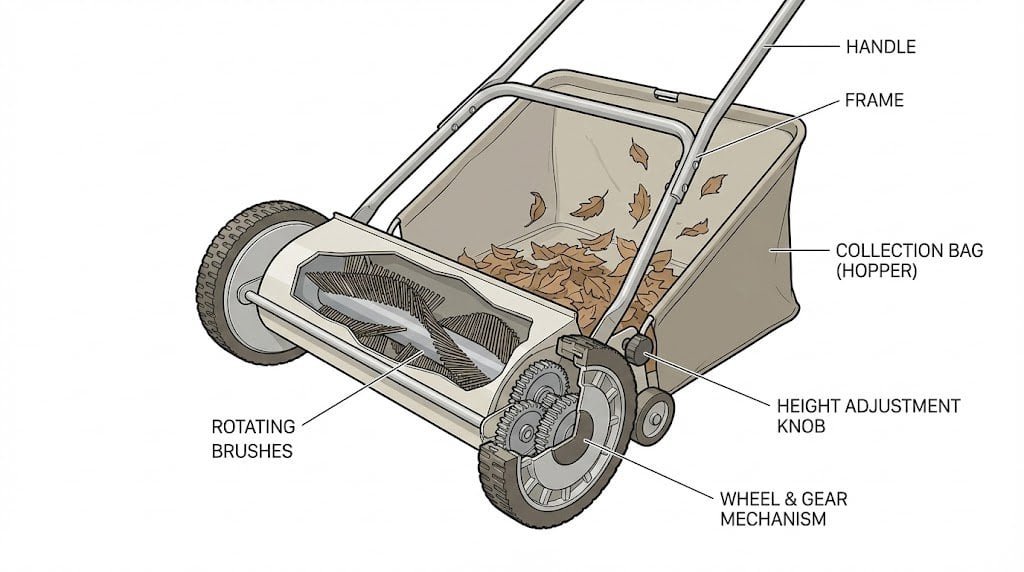
Unlike leaf blowers or electric sweepers, a manual lawn sweeper relies entirely on mechanical motion. When you push the sweeper forward, its wheels drive a set of rotating brushes that lift debris from the grass surface and guide it into an attached collection bag or hopper.
How Does a Lawn Sweeper Work
A lawn sweeper works by using mechanical movement to collect leaves, grass clippings, and light debris from the lawn surface. Instead of relying on electricity or fuel, it uses the motion of its wheels to power rotating brushes that sweep debris into a collection bag.
1. Wheel-Driven Motion
When you push the lawn sweeper forward, the wheels begin to rotate. These wheels are connected to a gear system that drives the internal brushes. The faster you push, the faster the brushes rotate.
2. Rotating Brushes
The sweeper uses stiff, cylindrical brushes positioned close to the ground. As the brushes spin, they lift debris from the grass without digging into the soil. Most sweepers allow brush height adjustment so the brushes can work effectively on different grass lengths.
3. Debris Collection
Once lifted, debris is guided into a rear or front collection bag (also called a hopper). The bag holds leaves and clippings until it is full and can be emptied manually.
4. Height Adjustment
Many lawn sweepers include height control settings. Proper adjustment ensures the brushes lightly touch the grass tips, allowing efficient sweeping without damaging the lawn.
5. Continuous Operation
As long as the sweeper is moving forward, the brushes continue rotating and collecting debris. There is no need to stop or restart the tool, making the process smooth and efficient.
Key Points to Remember
- They are designed for light to medium debris
- Lawn sweepers work best on dry lawns
- A steady walking pace improves collection efficiency
- Overfilled bags reduce performance
What Can a Manual Lawn Sweeper Pick Up?
Manual lawn sweepers are best suited for light to medium debris, including:
- Dry leaves
- Grass clippings
- Pine needles
- Small twigs
- Acorns or seed pods
They are not ideal for:
- Wet or matted leaves
- Heavy sticks or branches
- Mud, soil, or gravel
For best results, use a manual lawn sweeper when debris is dry and evenly spread.
Benefits of Using a Manual Lawn Sweeper
- 1. Quiet Operation: Manual sweepers produce almost no noise, making them perfect for early mornings or residential areas.
- 2. No Fuel or Electricity Needed: There’s no need for gas, batteries, or extension cords—just push and go.
- 3. Eco-Friendly Lawn Care: With zero emissions, manual sweepers are an environmentally responsible choice.
- 3. Low Maintenance: No engines means fewer parts to repair. Basic cleaning and occasional adjustments are usually enough.
- 5. Lightweight and Easy to Store: Most models are compact and easy to maneuver, making them suitable for even older homeowners.
Manual Lawn Sweeper vs Rake
| Feature | Manual Lawn Sweeper | Rake |
|---|---|---|
| Speed | Faster for large areas | Slower |
| Physical Effort | Moderate | High |
| Lawn Protection | Gentle | Can damage grass |
| Debris Collection | Bagged | Manual piles |
A lawn sweeper saves time and reduces strain, especially on medium-sized lawns.
When Is a Manual Lawn Sweeper the Best Choice?
A manual lawn sweeper is ideal if you:
- Have a small to medium-sized yard
- Want a quiet, simple solution
- Prefer low-cost and low-maintenance tools
- Need to clean up regular leaf fall or clippings
- Care about eco-friendly gardening
If your yard is very large or often covered with wet leaves, a powered sweeper may be more suitable.
How to Choose the Right Manual Lawn Sweeper
When selecting a model, consider:
- Sweeping width (wider models cover more area faster)
- Collection bag capacity
- Height adjustment options
- Build quality and wheel size
- Ease of emptying the hopper
For most homeowners, a mid-sized sweeper with adjustable brush height offers the best balance.
Tips for Best Performance
- Use on dry lawns for better pickup
- Mow before sweeping to reduce clogging
- Walk at a steady pace—too fast reduces efficiency
- Empty the bag before it becomes overfilled
- Store the sweeper in a dry place
How to Use a Lawn Sweeper: A Step-by-Step Guide
Keeping your lawn clean doesn’t have to be a tiring chore. A lawn sweeper is a simple, effective tool that makes collecting leaves, grass clippings, and other debris easy. Whether you have a manual or push-powered sweeper, using it correctly ensures the best results and protects your lawn.
Step 1: Choose the Right Time and Conditions
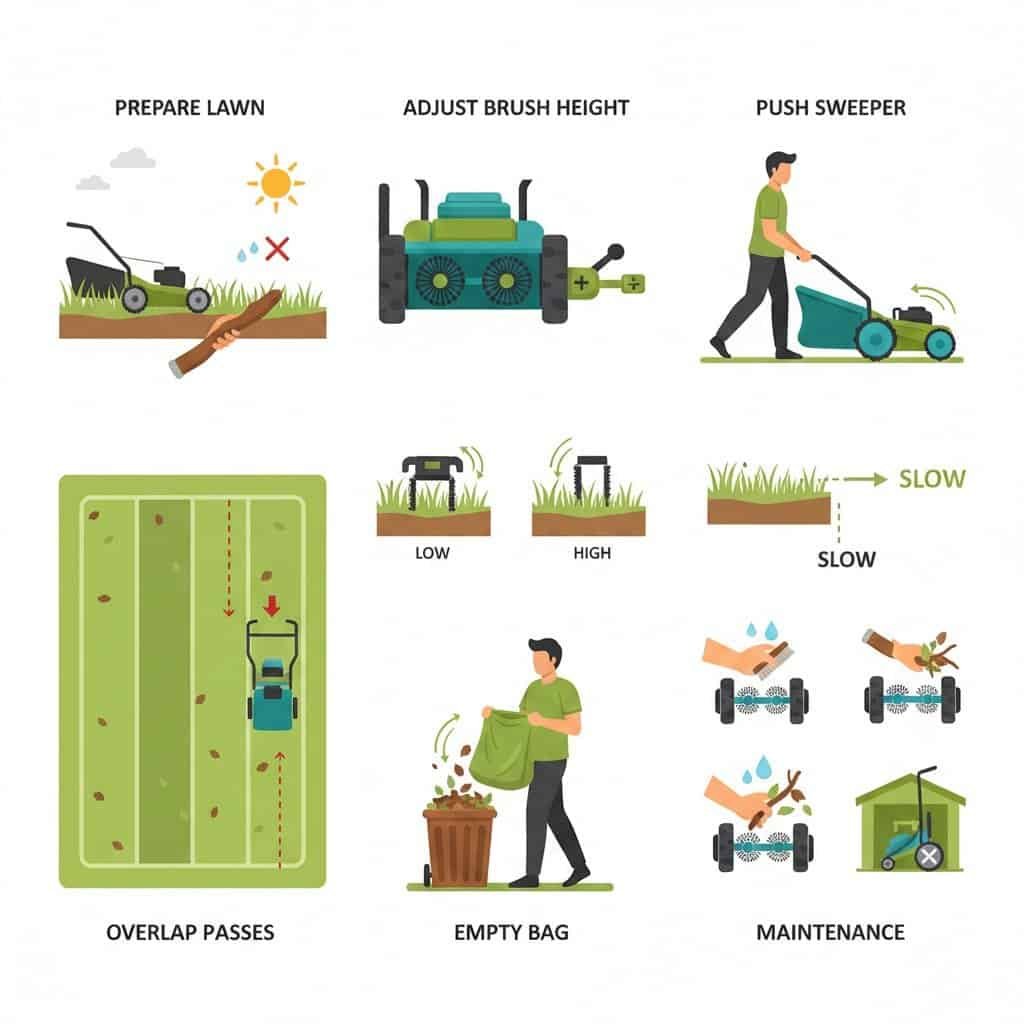
For optimal performance, use your lawn sweeper when:
- Leaves and debris are dry, not wet or damp
- The grass is mowed or relatively short
- The lawn is free of large sticks or heavy debris
Dry conditions allow the brushes to sweep efficiently, while short grass prevents clogging and damage.
Step 2: Adjust the Brush Height
Most lawn sweepers have adjustable brush height settings. Proper height ensures the brushes lightly touch the grass, lifting leaves and clippings without digging into the soil. For thick grass, raise the brushes slightly; for short lawns, lower them closer to the ground.
Step 3: Start Sweeping
- Position the sweeper at the edge of your lawn
- Push it slowly and steadily forward
- Let the wheels drive the brushes, which lift debris and deposit it into the collection bag
Avoid rushing—moving too fast can reduce efficiency, leaving debris behind.
Step 4: Overlap Your Passes
For thorough cleaning:
- Sweep in rows, similar to mowing patterns
- Slightly overlap each pass to ensure no leaves are missed
- Empty the bag periodically if it fills up before completing your lawn
Step 5: Empty the Collection Bag
Once the bag is full, remove it carefully and empty the debris into a compost bin, yard waste container, or garden pile. Never overfill the bag, as this can reduce brush performance.
Step 6: Maintenance After Use
To keep your lawn sweeper in good condition:
- Brush off remaining debris from the brushes and frame
- Check for stuck twigs or leaves that may reduce efficiency
- Store in a dry place to prevent rust and damage
Routine maintenance keeps the sweeper working effectively year after year.
Tips for Best Results
- Sweep regularly, especially during leaf season, to avoid heavy buildup
- Avoid using on wet grass, which can clump and clog the brushes
- Adjust speed depending on debris density—slower for thick layers
- For larger yards, consider dividing the lawn into sections for easier sweeping
Final Thoughts
Manual lawn sweepers are a practical, budget-friendly tool for homeowners who want a cleaner lawn without noise, fuel costs, or complex maintenance. While they may not replace powered equipment for heavy cleanup, they excel at routine lawn care and light debris collection.
For many homes, a manual lawn sweeper is a simple upgrade that makes lawn maintenance easier and more enjoyable 🌿

1 thought on “Manual Lawn Sweepers Explained: A Simple Guide for Homeowners”